


TL;DR
- Bolt.new optimizes for rapid prototyping: turn ideas into functional prototypes within minutes for MVPs, demos, and validation.
- Appwizzy is built for persistent workspaces that support the full product lifecycle: collaboration, infrastructure, scaling, and maintainability.
- “Prototype debt” can emerge when fast-generated MVPs must later be rebuilt, migrated, or restructured for production needs.
- Choose Bolt.new for early-stage experimentation; choose Appwizzy when the app becomes operational software with real users and integrations.
Fact Box
- The article argues many AI app builders look impressive in the first 15 minutes, but long-term needs emerge after the demo.
- Bolt.new is described as enabling users to turn ideas into functional prototypes within minutes instead of weeks.
- The article says a startup can generate a working MVP in a day using AI app builders.
- Appwizzy is positioned as providing persistent workspaces so teams can keep developing in the same environment as the product scales.
- The article states the AI-powered application builder market has exploded in the last two years.
Most AI app builders look impressive in the first 15 minutes. The real question is what happens after the demo, when your startup needs collaboration, infrastructure, scaling, governance, and a product that survives beyond the prototype.
When companies search for a comparison between Bolt.new and Appwizzy, they are usually trying to answer questions like:
- Which platform is better for startups building real products?
- Is rapid prototyping enough, or do we need persistent development workspaces?
- What happens when the app grows in complexity, users, integrations, and security requirements?
- Which tool reduces long-term engineering and operational costs?
As computer scientist Harold Abelson famously said: “Programs must be written for people to read”. That quote matters more than ever in the era of AI-generated software.
The market for AI-powered application builders has exploded in the last two years. Businesses can now generate dashboards, SaaS products, internal tools, and MVPs from prompts instead of writing every line manually. But the industry has also created major confusion: many organizations mistake “AI-generated prototype” for “production-ready software.” Multiple industry analyses now point to the same divide: tools optimized for speed and demos versus platforms designed for long-term operational software development.
By reading this article, you will gain a clear understanding of the fundamental difference between Bolt.new and Appwizzy, why persistent workspaces are becoming increasingly important for startups and growing businesses, and how both platforms approach infrastructure, deployment, collaboration, and scaling. You will also discover which solution is better suited for rapid prototypes, internal business tools, SaaS products, and enterprise-grade workflows, while uncovering the hidden operational and financial costs companies often overlook when choosing AI app builders. Most importantly, this article will help you determine which platform best aligns with your company’s current stage of growth and long-term product strategy.
The Real Divide in AI App Builders
The AI app builder market is growing rapidly, but not all platforms are designed for the same purpose. While many tools can generate applications from prompts and accelerate development, a major divide is emerging between platforms focused on rapid prototyping and those built for long-term software development.
Platforms like Bolt.new prioritize speed and experimentation. They help founders, startups, and product teams turn ideas into working prototypes within minutes, making them ideal for MVPs, demos, and early validation. Faster prototyping allows businesses to test ideas, gather feedback, and move quickly without investing heavily in engineering resources.
However, once a product moves beyond the prototype stage, business needs change. Applications require stable infrastructure, collaboration workflows, databases, integrations, deployment pipelines, and long-term maintainability. At this point, companies are no longer building demosю They are managing operational software products.
This is where platforms like Appwizzy differ. Instead of focusing only on fast generation, persistent workspace platforms are designed to support the full product lifecycle, helping businesses maintain, scale, and continuously develop applications over time.
In simple terms, prototype-focused tools optimize for speed, while persistent workspace platforms optimize for continuity and scalability. Understanding this difference is essential for businesses choosing the right AI development platform for their stage of growth.
Appwizzy: Building Beyond the Prototype
While many AI builders focus primarily on rapid generation, Appwizzy takes a more operational approach to software development. The platform is designed around persistent workspaces that support not only fast creation but also long-term product development, collaboration, and scalability.
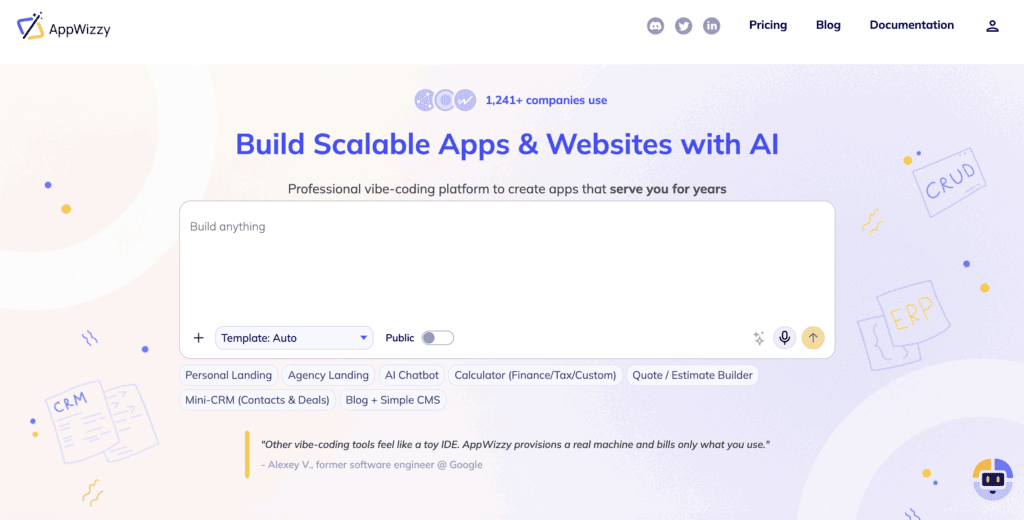
As applications grow, businesses typically need much more than a generated interface. They require stable infrastructure, backend services, databases, authentication systems, deployment pipelines, integrations, and collaborative workflows that can support ongoing product evolution. Appwizzy addresses these challenges by providing persistent environments that allow teams to continuously build, manage, and improve applications over time.
This approach becomes especially valuable for startups moving beyond the MVP stage, agencies handling client projects, and businesses building operational software products rather than temporary demos. Instead of rebuilding or migrating prototypes later, teams can continue developing within the same environment as the product scales.
Appwizzy’s persistent workspace model also supports better continuity across development cycles. Teams can maintain project context, collaborate more effectively, and manage increasingly complex applications without losing visibility into infrastructure and workflows. For businesses focused on long-term growth, maintainability, and operational stability, this creates a more sustainable foundation for AI-assisted software development.
Bolt.new: The Strength of Instant Momentum
One of the biggest reasons startups and founders are drawn to Bolt.new is speed. The platform is designed to remove as much friction as possible from the early stages of product development, allowing users to turn ideas into functional prototypes within minutes instead of weeks.
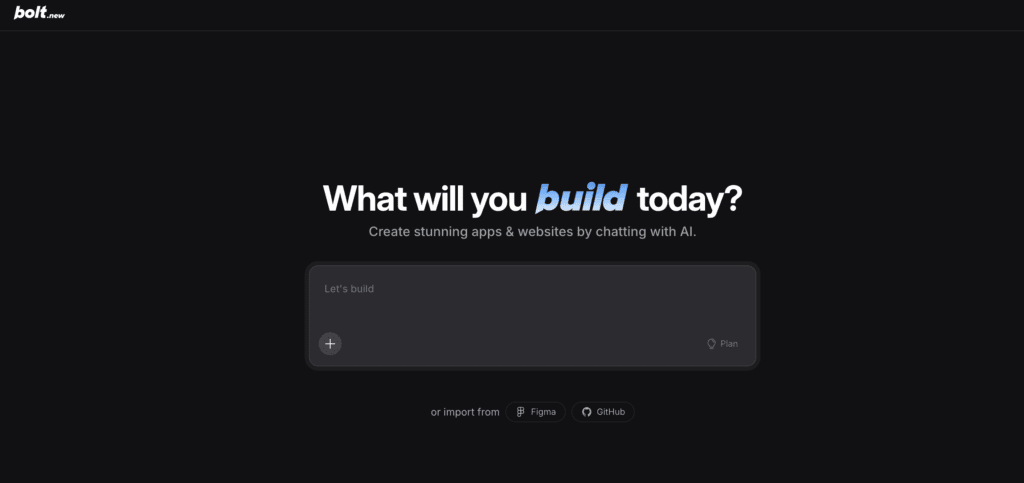
Traditionally, building even a simple MVP required setting up development environments, configuring frameworks, writing boilerplate code, and handling deployment workflows before the product could even be tested. Bolt.new simplifies this process through AI-powered generation and browser-based development, making app creation significantly more accessible for non-technical founders, designers, and product teams.
This rapid workflow is especially valuable during the validation stage. Startups can quickly create demos, test product concepts, gather user feedback, and present working applications to investors without committing large engineering resources upfront. Faster iteration cycles also help businesses experiment with multiple ideas before deciding which direction to scale.
Bolt.new performs particularly well for frontend-heavy applications, UI experiments, internal prototypes, and early-stage SaaS concepts where momentum and fast execution matter more than long-term infrastructure complexity. For many startups, the ability to move from concept to visible product almost instantly becomes a major competitive advantage.
The Hidden Cost of “Prototype Thinking”
AI app builders have made it incredibly easy to launch products fast. A startup can generate a working MVP in a day, test an idea with users, and even pitch investors before writing much code manually. That speed is valuable, especially in the early stages.
But many companies run into the same problem later: the prototype was never built to become a real product.
At first, everything works well. The app looks polished, the demo impresses investors, and the team moves quickly. Then the product starts growing. More users join, new features are added, integrations become necessary, and the software slowly turns into a core part of the business.
That is usually when the first limitations appear.
When a Prototype Stops Being Enough
A prototype is created to validate an idea quickly. A production product has a completely different purpose. It needs to support daily operations, real customers, and long-term growth.
As applications become more complex, businesses begin dealing with infrastructure, security, deployments, integrations, databases, and collaboration between multiple team members. Many rapid-generation platforms are excellent at creating the first version of an app, but they are not always designed to manage growing systems over time.
This often leads to situations where teams spend more time fixing or restructuring the product than building new features.
The Problem of “Prototype Debt”
Many startups eventually accumulate what can be called prototype debt, the hidden cost of prioritizing speed without considering long-term maintainability.
In the beginning, these issues are easy to ignore because rapid progress feels more important. But once the product gains traction, technical limitations start affecting business operations. Teams may need to rebuild parts of the application, migrate to different infrastructure, reorganize workflows, or spend engineering resources cleaning up unstable systems.
What initially saved time can later create additional complexity and unexpected costs.
Why Long-Term Thinking Matters
Rapid prototyping is not the problem. In fact, for validation and experimentation, it is often the smartest approach.
The real mistake is assuming that the fastest way to launch a product is automatically the best foundation for scaling it.
For startups building SaaS products, internal platforms, or customer-facing applications, maintainability becomes just as important as speed. The goal is not only to launch quickly, but also to continue developing the product efficiently months or years later.
That is why businesses are starting to look beyond simple AI generation features and pay more attention to how well a platform supports long-term product development, operational continuity, and future growth.
Why Persistent Workspaces Matter for Businesses
Launching a product quickly is important, but for most businesses, the real challenge begins after launch. Once an application starts gaining users, adding features, and becoming part of daily operations, companies need much more than fast generation tools. They need stability, continuity, and an environment that can support long-term growth.
That is where persistent workspaces become valuable.
Software Development Does Not Stop After the MVP
Many AI app builders are optimized for creating the first version of a product. They help startups move quickly during ideation, validation, and prototyping stages.
But software rarely stays static.
As products evolve, businesses need to continuously update features, manage infrastructure, improve security, handle integrations, and support growing user bases. Without a stable development environment, maintaining that progress becomes increasingly difficult.
Persistent workspaces are designed to support this ongoing process instead of focusing only on initial generation.
Better Continuity for Growing Teams
In the early stages, a single founder or small team can manage most decisions alone. As the company grows, development becomes more collaborative.
New developers join projects. Designers, product managers, and operations teams become involved. Multiple people begin working on the same product simultaneously.
Persistent workspaces help maintain continuity across these workflows. Teams can keep project context, infrastructure, and development history connected over time, reducing confusion and unnecessary rebuilding.
More Than Just Frontend Generation
Businesses eventually need more than interfaces and demos.
Operational software requires databases, authentication systems, deployments, integrations, monitoring, and scalable backend infrastructure. Managing these components across disconnected tools can create unnecessary complexity as products grow.
Persistent workspaces provide a more centralized environment where infrastructure and application development evolve together.
Reducing Long-Term Friction
One of the biggest challenges for growing startups is maintaining development speed while product complexity increases.
Without continuity, teams often spend time recreating environments, fixing architecture issues, or restructuring systems that were initially built only for short-term experimentation.
Persistent workspaces help reduce this friction by giving businesses a more stable foundation for long-term product development.
Why It Matters for Startups
For early-stage companies, speed is important. But long-term scalability matters too.
The goal is not only to launch quickly, but it is also to build software that can continue growing without forcing the company into constant migrations, rebuilds, or operational chaos later.
That is why more startups are beginning to look beyond rapid AI generation alone and prioritize platforms that support the full lifecycle of a product.
Bolt.new vs Appwizzy: Core Philosophy Comparison
| Category | Bolt.new | Appwizzy |
| Primary focus | Rapid prototyping | Persistent production workspaces |
| Best for | MVPs, demos, experiments | Operational software |
| Environment model | Browser sandbox | Dedicated persistent workspace |
| Infrastructure depth | Lightweight | Full-stack persistent infrastructure |
| Backend orientation | External integrations common | Built-in backend workflows |
| Collaboration style | Fast iteration | Git-native operational workflows |
| Long-term maintainability | Moderate | High |
| Scaling orientation | Prototype-first | Production-first |
| Technical governance | Limited | Enterprise-friendly |
| Deployment model | Fast publishing | Operational deployment pipelines |
The important insight is that these tools are not necessarily direct substitutes. They optimize for different stages of company maturity.
When Appwizzy Becomes More Valuable
As products grow beyond the prototype stage, business priorities begin to change. Applications start requiring stable infrastructure, backend services, collaboration workflows, integrations, and long-term maintainability. At this stage, Appwizzy becomes the stronger option.
Unlike tools focused mainly on rapid generation, Appwizzy is designed around persistent workspaces that support continuous product development. Instead of rebuilding or migrating systems later, teams can continue scaling and improving applications inside the same environment.
This becomes especially important for SaaS startups, operational business tools, and companies managing real customer data or complex workflows. Persistent environments also make collaboration easier as more developers, designers, and stakeholders become involved in the product.
Appwizzy becomes more valuable for businesses that need:
- long-term product scalability
- stable development environments
- collaboration across growing teams
- backend infrastructure and integrations
- operational continuity beyond the MVP stage
For startups planning long-term growth rather than short-term experimentation, Appwizzy provides a more sustainable foundation for building and maintaining software over time.
When Bolt.new Is the Better Choice
Bolt.new is most valuable during the early stages of product development, when startups need to move quickly and validate ideas with minimal friction. Instead of spending weeks setting up infrastructure or writing boilerplate code, teams can generate working prototypes and interfaces within minutes.
This makes the platform especially useful for founders testing business ideas, creating investor demos, or experimenting with different product concepts before committing significant engineering resources. Fast iteration allows startups to gather feedback earlier and adapt quickly without high upfront costs.
Bolt.new works particularly well for:
- MVPs and startup prototypes
- proof-of-concept applications
- UI and frontend experiments
- hackathons and internal tools
- non-technical founders building first versions of products
For businesses that prioritize speed, accessibility, and rapid experimentation, Bolt.new provides an efficient way to turn ideas into visible products quickly.
Choosing the Right Platform for Your Business
Choosing between Bolt.new and Appwizzy ultimately depends on your company’s stage, goals, and long-term product strategy. Both platforms solve important problems, but they are designed for different phases of software development.
If your priority is validating ideas quickly, building demos, or launching an MVP with minimal setup, Bolt.new offers a fast and accessible way to move from concept to prototype. It is especially useful for early-stage startups, solo founders, and teams focused on rapid experimentation.
Appwizzy becomes more valuable once the product starts growing and requires stability, collaboration, infrastructure, and long-term maintainability. For SaaS companies, operational business tools, and startups planning to scale continuously, persistent workspaces provide a more sustainable development environment.
A simple way to think about the difference:
- Bolt.new → best for fast prototypes and validation
- Appwizzy → best for long-term product development and scaling
In simple terms, Bolt.new helps businesses launch faster, while Appwizzy helps them continue growing without rebuilding later.
The Future of AI Development Platforms
AI development platforms are evolving quickly, and the market is beginning to separate into two clear categories: tools focused on rapid generation and platforms designed for long-term software operations. While early AI builders mainly competed on how fast they could create apps, businesses are now paying more attention to scalability, collaboration, infrastructure, and maintainability.
This shift is changing how companies evaluate AI development tools. Generating a prototype is no longer enough, businesses want platforms that can support products throughout their entire lifecycle, from idea validation to production growth.
As AI-assisted development becomes more common, the future will likely combine both approaches: fast prototyping for experimentation and persistent workspaces for operational software development.
The market is moving toward:
- faster AI-assisted development
- more persistent and scalable environments
- stronger collaboration workflows
- deeper infrastructure integration
- better support for long-term product growth
The companies that benefit most from AI development platforms will not necessarily be the ones building the fastest prototypes, but the ones choosing tools that can continue supporting their products as the business evolves.
Conclusion
Both Bolt.new and Appwizzy represent the new generation of AI-powered development platforms, but they solve different business problems. Bolt.new is excellent for fast experimentation, MVP validation, and rapid prototyping, helping startups move from idea to demo with minimal friction.
However, as products grow, businesses eventually need more than speed alone. They need stable infrastructure, collaboration workflows, scalability, and development environments that can support long-term product evolution. That is where Appwizzy becomes the stronger choice.
Its persistent workspace approach gives startups and businesses a more sustainable foundation for building operational software without constantly rebuilding systems or migrating projects later. For companies planning to scale beyond the prototype stage, Appwizzy offers a better balance between AI-powered speed and long-term product stability.
In the end, the best platform is not the one that creates the fastest demo, it is the one that can continue supporting your business as the product grows.